

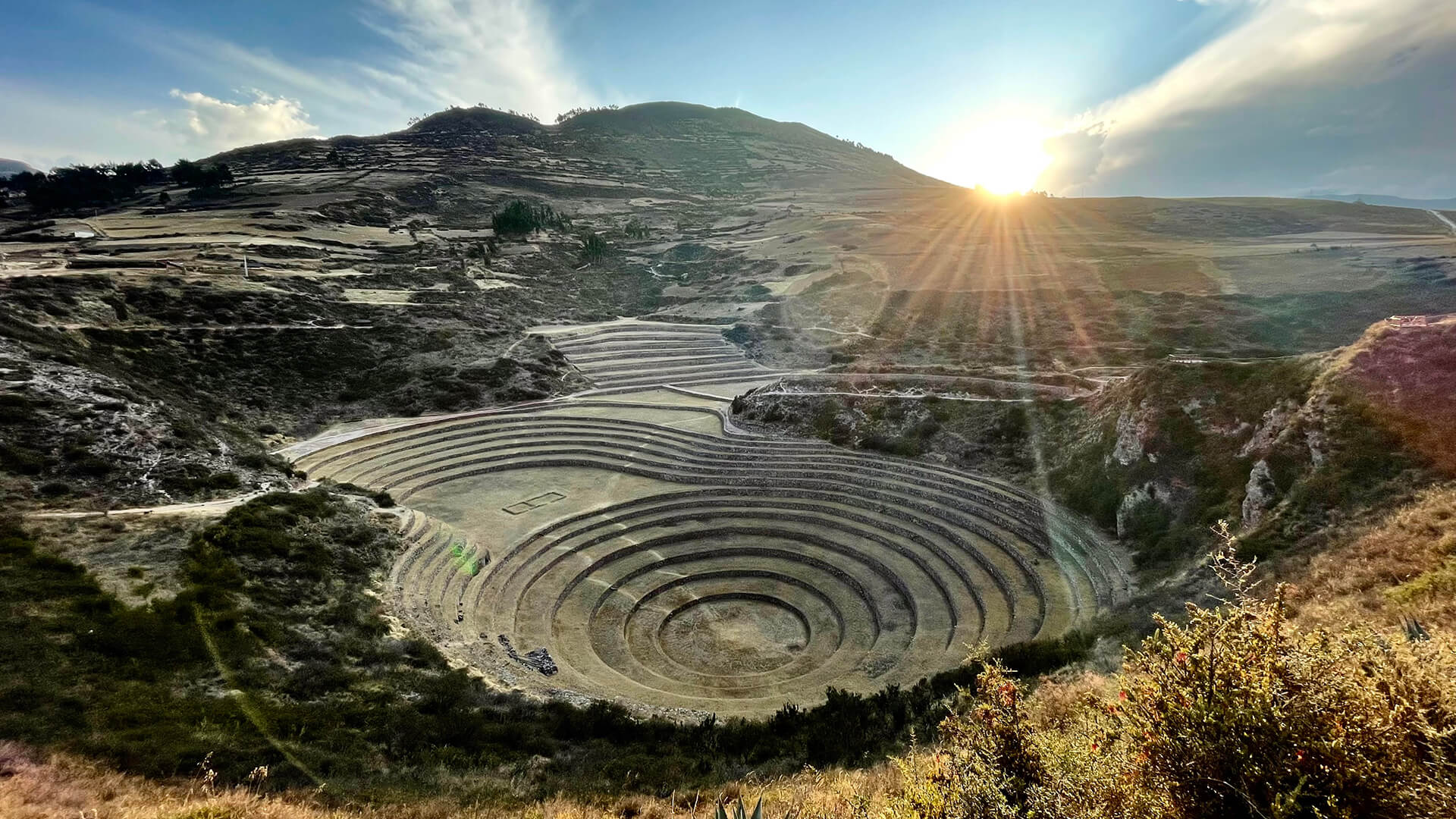
Located in the breathtaking Sacred Valley of the Incas, Moray stands as one of the most enigmatic archaeological sites in Peru. Its concentric circular terraces carved into the earth have intrigued explorers, scientists, and visitors for decades. In this guide, we’ll explore the origins of Moray, the most accepted theories about its function, and how to plan an unforgettable visit to this captivating site.
Discovering the Ruins of Moray
Nestled high in the Peruvian Andes, the Moray terraces form a spectacular amphitheater-like formation. These circular depressions—called “muyus”—plunge to depths of nearly 150 meters (490 feet), with the largest terrace stretching close to 180 meters (590 feet) in diameter. Surrounded by majestic mountain views and a quiet ambiance, Moray offers a serene yet thought-provoking experience for any traveler.
Theories on Moray’s Purpose
The true function of Moray remains a mystery, sparking multiple interpretations from researchers and enthusiasts alike.
Inca Agricultural Laboratory
The most widely accepted explanation is that Moray served as an agricultural testing site. Due to its unique design, each terrace creates distinct microclimates, allowing the Incas to simulate various ecological zones. This would have enabled them to cultivate different crops, experiment with growing conditions, and enhance their agricultural techniques—making Moray one of the world’s earliest examples of agricultural science.
Ceremonial Site
Some believe Moray was a sacred space used for rituals and community gatherings. Today, the local community of Misminay still honors these ancient traditions through ceremonies such as Moray Raymi. Though it is unlikely the site was solely ceremonial, this aspect adds spiritual depth to Moray’s purpose.
Mining Origins
A less supported theory proposes that Moray might have begun as a mining quarry. Over time, its function could have shifted toward agricultural and spiritual uses as the Incas expanded their empire and infrastructure.
Extraterrestrial Speculation
A fringe theory speculates that Moray’s symmetrical and circular layout indicates non-human influence. While there’s no concrete evidence supporting this, it highlights the site’s allure and the curiosity it generates among alternative history followers.
Historical Background
Though often attributed to the Inca, archaeological studies suggest that Moray may have foundations laid by earlier civilizations, possibly the Wari. However, it was the Incas who refined the structure and put it to significant use between the 12th and 14th centuries.
It wasn’t until the early 20th century that Moray gained wider recognition. Aerial surveys in the 1930s revealed the dramatic layout of the terraces, prompting increased academic interest. For years, local communities such as Misminay cultivated the site before it received official protection and recognition as a national heritage site.
Highlights of a Visit to Moray
Visitors to Moray can look forward to:
- The Terraces: These massive circular terraces are the main feature, creating a jaw-dropping visual effect and reflecting the Inca mastery of earthworks.
- Temperature Variations: As you descend the terraces, you’ll notice slight temperature changes, reinforcing the idea of microclimates.
- Natural Beauty: The surrounding scenery—rolling hills and distant peaks—makes Moray an excellent destination for photography and peaceful reflection.
When to Visit Moray
The ideal time to visit is during Peru’s dry season, from April through October. During these months, the weather is more stable, the skies are clearer, and conditions are perfect for hiking and exploring.
Altitude and Health Tips
Moray is situated at approximately 11,500 feet (3,500 meters) above sea level. Visitors should be mindful of altitude sickness, especially if arriving directly from lower elevations. Staying hydrated, avoiding heavy meals, and acclimating for at least a day or two in the Sacred Valley or Cusco is recommended. Coca tea is also a popular local remedy for easing altitude symptoms.
Getting There
Moray is located about 33 miles (53 kilometers) northwest of Cusco. It’s most commonly visited via day trips that often combine stops at nearby attractions. The scenic drive through the Sacred Valley includes picturesque towns like Maras and Urubamba. Private transportation or guided tours are the most convenient options and often include informative narratives, cultural context, and multilingual guides.
Nearby Attractions
While visiting Moray, consider exploring the surrounding gems:
- Maras Salt Ponds: Located a short drive away, these ancient salt pans are still in use today and offer a glimpse into Inca-era salt production.
- Town of Maras: This quiet Andean village features charming colonial architecture and is an excellent stop for cultural immersion.
- Chinchero: Renowned for its traditional weaving practices and Sunday markets, Chinchero offers a deeper look into the living culture of the Andes.
What to Pack for Your Visit
To ensure your visit to Moray is both comfortable and enjoyable, don’t forget to bring:
- Your Tourist Ticket for Cusco (required for entry)
- Water and light snacks
- Comfortable walking shoes
- A camera or smartphone for photos
- Cash for small purchases or tips
- Sun protection gear (hat, sunglasses, sunscreen)
- A light rain jacket, especially if visiting during the rainy season
Final Thoughts
Moray is much more than an archaeological site—it’s a window into the innovative spirit of the Inca civilization and their intricate understanding of nature. Whether you’re interested in ancient agriculture, Inca engineering, or simply want to marvel at one of the most unique landscapes in Peru, Moray delivers on all fronts.
For a truly enriching experience, consider booking a curated tour with Aantur Perú. Their expert guides and personalized service ensure that your visit to Moray—and the Sacred Valley at large—will be both insightful and unforgettable.


